
Enhancing Educational Operations with Digital Storage
In the ever-evolving educational landscape, the shift toward digital transformation is not just a trend but a necessity. Educational institutions and schools are hubs of information, where administrative paperwork, student records, and educational material can mount up. The digitization of this information through document scanning and storage solutions offers numerous advantages by making processes more efficient, secure, and accessible.
In this article, we will delve into the five compelling reasons why educational institutions should not just consider, but actively embrace digital storage. The potential benefits are significant, and the transformation it can bring to their operations is nothing short of remarkable.
Growth Potential for Education Automation Innovations
Despite the remarkable potential for cost reduction and increased efficiency being an advantage for higher education, many universities are still not fully utilizing cost-effective business process automation (BPA). A recent survey by Laserfiche revealed that a mere 10% of institutions have fully adopted digital processes—leaving a vast opportunity unexplored for the other 90%.
With the potential to streamline operations, reduce expenses, and enhance overall efficiency, it is crucial for schools, districts, and universities to recognize the importance of integrating BPA into their daily operations in order to stay competitive and meet students’ and faculty members’ evolving needs.
Five Benefits of Cloud Storage for Schools
1. Enhanced Security and Compliance for Schools
Protecting Sensitive Data
Educational institutions hold valuable data such as student records, staff details, and financial records. Schools must also maintain extensive student databases, including attendance, demographics, test scores, enrollment, and grades. Mishandling this data can lead to breaches, and the number of breaches is rising: Emsisoft found that attacks on school districts rose from 45 in 2022 to 108 in 2023.
Digital storage for schools provides advanced security features that traditional paper-based storage systems cannot match. With encryption, access controls, and backup capabilities, digital storage ensures that sensitive information is well protected against unauthorized access and data breaches.
Compliance with Regulations
Educational establishments are required to adhere to educational and privacy laws to safeguard student information. Digital storage systems help organizations manage consent documents, access records, and audit trails for scrutiny.
With the average cost of a data breach in higher education at $3.65 million, the education industry needs to revise its cybersecurity plan to tackle compliance and security issues in a blended learning setting. In addition to protecting against cyberattacks, schools must comply with increasing data privacy and regulatory requirements, such as the following:
- Family Educational Rights and Privacy Act (FERPA) protects personal educational records of students.
- Protection of Pupil Rights Amendment (PPRA) sets guidelines for gathering and utilizing student survey or evaluation information.
- Health Insurance Portability and Accountability Act (HIPAA) establishes guidelines to safeguard confidential health data.
- The Gramm-Leach-Bliley Act (GLBA) is relevant to the methods education institutions utilize to gather, store, and use student financial documents (for instance, tuition fees and/or financial aid) that include personal data.
- Children’s Online Privacy Protection Act (COPPA) requires operators of online services, applications, and websites to safeguard the data of children.
- California Consumer Privacy Act (CCPA): The CCPA and EU General Data Protection Regulation (GDPR) are regulations for global data protection and privacy that require compliance.
2. Streamlined Administrative Efficiency
Centralized Document Management
One of the greatest advantages of implementing digital storage in schools is the centralization of documents. Enterprise content management systems allow for the organization of all files in one place—simplifying retrieval and management. This kind of school storage system can significantly reduce the time staff spend searching for documents, thus increasing productivity.
Business Process Automation for Schools
BPA in schools involves using technology to streamline and automate repetitive tasks like student registration, attendance tracking, and grade management. By implementing software solutions, schools can save time, reduce errors, and improve overall efficiency.
Robotic process automation software can be customized to meet the specific needs of each school, freeing up staff time and enhancing the educational experience for students. Automation also improves communication and collaboration among staff, students, and parents, leading to better decision-making and increased productivity.
3. Cost Savings and Environmental Benefits
Reducing Physical Storage Needs
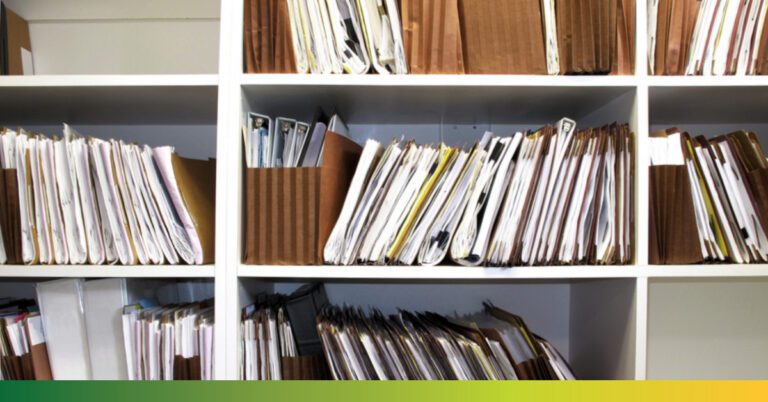
The cost of maintaining physical storage spaces can be substantial for schools. By transitioning to digital storage, educational institutions can reduce or even eliminate the need for filing cabinets, storage rooms, and paper-based records. This saves money not only on storage expenses but also on printing and paper costs.
Eco-Friendly Practices
Cloud storage for schools contributes to environmentally friendly practices by reducing paper waste. Educational institutions that adopt digital solutions demonstrate a commitment to sustainability, an important value to impart on the student population.
4. Improved Collaboration and Sharing
Real-Time Document Sharing
Digital storage enables real-time collaboration among teachers, students, and administrative staff. Documents stored in the cloud can be accessed and edited by multiple users simultaneously—facilitating teamwork and ensuring everyone is always working with the most up-to-date information.
Access Across Devices and Locations
With document scanning and cloud storage, educational materials and administrative documents can be accessed from any device with internet connectivity. This is particularly beneficial for schools with multiple campuses or for staff and students who need to work remotely.
5. Disaster Recovery and Continuity
Protecting Against Loss
Paper documents are vulnerable to a variety of disasters, including fires, floods, and even simple misplacement. Digital storage provides a safeguard against these risks, with cloud-based solutions offering off-site backups that ensure data is not lost even in the event of a physical disaster at the school.
Ensuring Educational Continuity
In circumstances where physical access to the school is not possible, such as during a pandemic or natural disaster, having educational content and administrative documents in digital form allows for the continuity of education and operations. This resilience is crucial for minimizing disruptions to the educational process.
Conclusion
The case for digital storage in educational institutions is clear. From enhancing security to streamlining administrative processes, cutting costs, fostering collaboration, and ensuring disaster recovery, the benefits are manifold. As schools and educational institutions look to the future, the adoption of digital storage and education document management will be a pivotal step in their evolution.
Digital storage is not just about keeping up with technological advancements; it’s about creating a more secure, efficient, and collaborative educational environment. By embracing digital storage solutions, schools can focus on their primary mission: delivering high-quality education to the next generation. Learn more about how VRC VitalECM solutions can help your school, district, or university go digital in 2024.